

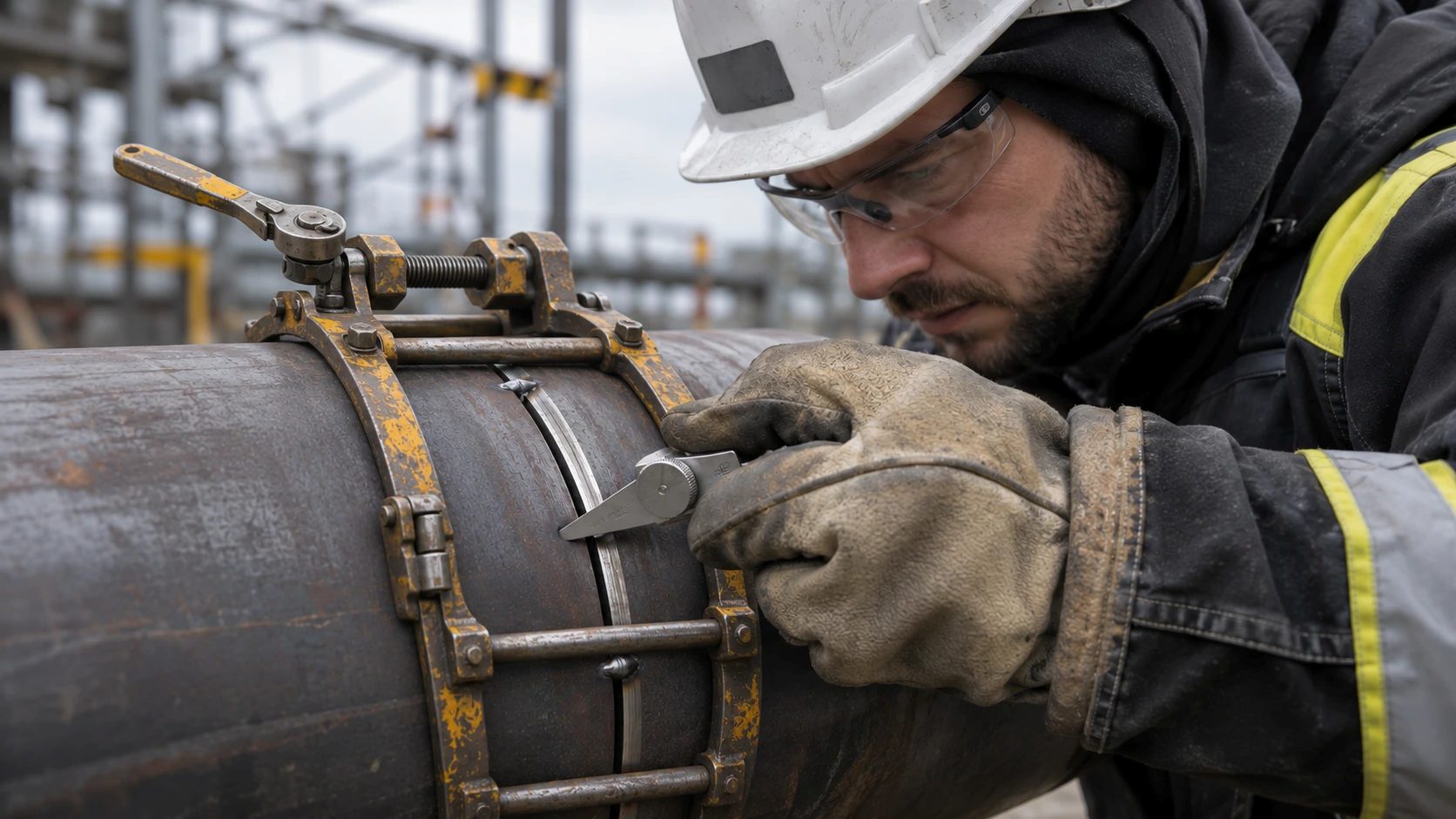
In large-scale EPC environments, welding quality is not only about welder skill. The most common sources of rework we see are:
- incorrect WPS selection for the material grade,
- lack of material traceability before fit-up,
- incomplete weld log documentation,
- delayed NDT scheduling that puts pressure on execution.
Quality is controlled before arc ignition.
Fit-up decides the weld
Welding quality is strongly influenced by fit-up quality. Before welding starts, construction teams must control:
- root gap,
- alignment,
- bevel condition,
- cleanliness,
- tack weld quality,
- material identification.
Problems at this stage transfer directly into welding and inspection. A good weld starts before the welder strikes the arc — construction quality is built at the preparation stage.
Traceability is a control mechanism, not paperwork
Material traceability failures rarely appear immediately. They surface at the worst possible moment. Typical weak points:
- mixed material storage without clear heat number separation,
- incomplete MTC verification before fit-up,
- missing link between the weld log and the spool number,
- late discovery of a wrong material grade.
When traceability collapses, rework expands beyond welding. Schedule protection starts with controlled material flow.
NDT planning is a schedule tool
In large EPC projects, delays rarely start with welding. They start with poor inspection sequencing:
- late NDT booking after weld completion,
- insufficient coordination with inspection bodies,
- no planned repair window,
- cumulative pressure before the hydrotest.
When inspection is reactive, the schedule becomes fragile. Proper NDT integration protects float and reduces rework cycles. Inspection is not a formality — it is part of the construction strategy.
The field may look finished — delivery depends on evidence
Installed work has limited value if the records are incomplete. Critical alignment includes weld logs, NDT reports, material certificates, pressure test packs, punch list status and as-built updates.
In pharmaceutical facilities this is even more visible. Piping is not complete when welding is finished: weld log traceability, material certificates, NDT validation, as-built accuracy and cleanliness and flushing verification all have to line up. In GMP environments, documentation gaps can delay handover more than technical defects.
Execution without records is not controlled completion.
Discipline must match system criticality
In high-integrity systems, “almost correct” is not acceptable. Projects with strict quality requirements demand full control of material traceability, welding documentation, inspection records and change management. Small deviations accumulate into major delays.
Documentation discipline, material verification and proper sequencing are what protect the project schedule.
This article is based on our LinkedIn posts. Follow METAL MASTERS on LinkedIn →